Legs Talk: Dr Sophie Shotter

Acclaimed aesthetic doctor with over fifteen years of medical experience and numerous accolades to her name, Dr Sophie’s philosophy is no clones. No “one look.” Just confidence, care and real results built over time.
“Home care is your exercise — the clinic is your personal trainer.” — Dr Sophie Shotter
Kate: So, what inspired your transition from working in anaesthetics and intensive care in the NHS to aesthetic practice?
Dr Sophie: I'd done several years in the NHS and I was working at a relatively senior level but I was at that point in my life, single, no children. And I was someone who didn't really understand how to say no. I kept giving. I just was working the most ridiculous hours and I didn't have the boundaries in place. So I'd always been curious about aesthetics. I thought, let's go off and do a training course. And I never expected it to become my whole career, but I fell in love with it from day one. And it really was for me about how I get to make people feel and that bringing their smile back and that's so rewarding. And so, I took a decision to leave and I did briefly go back for COVID. I did two months back in COVID Intensive Care.
Kate: What is your core philosophy when it comes to aesthetic treatment?
Dr Sophie: I hate the homogeny that we see in some areas of aesthetics and I don't want to see everyone looking the same. And also what everyone wants to achieve for themselves is different. So it very much is about spending time getting to know somebody, getting the feel for them, putting together a treatment plan and something that is almost always over a long period of time.
Kate: So skin—you have the most beautiful skin.
Dr Sophie: Oh, thank you.
Kate: So what do we need to be doing for, what favours do we need to be doing in between treatments, if you like, at home?
Dr Sophie: Home care's the most important part. If you think about it as an analogy with exercise, home care is you exercising. And coming to see someone in clinic is like having a personal trainer. A cleanser. Morning and night. Never going to bed with your makeup on. A good antioxidant in the morning. A retinoid or a peptide, I think is a great inclusion. But remember for me it isn't no pain, no gain. You shouldn't be putting your skin through an awful lot of inflammation to achieve results. And that's why peptides can be brilliant for those who can't tolerate a retinoid. A hydrator of some description. And then a sunscreen. Every day. Build a habit.
Kate: That really answers my other question, which was about ingredients.
Dr Sophie: I mean, retinoids are amazing and they are the most evidence based ingredient we've got. Acids are fantastic. And again, there's an acid for every skin. I'm a big fan actually of something called polyhydroxy acids because they're so well tolerated. I have some brilliant pads with them on. Most skins can use them every day with no issue. And that just encourages healthy cell turnover. Gives that glow. And then depending on your skin type, a hyaluronic acid or some people need more in the way of lipids and ceramides. But something that's a good hydrator and also locks in moisture.
Kate: Nutrition.
Dr Sophie: Oh, crucial.
Kate: Anything you can think of that we must eat?
Dr Sophie: The thing I think is applicable to everyone. Absolutely everyone. Is eating enough fibre and eating plant diversity. And making sure that you maintain good protein intake. But I do think a lot of people go OTT on protein. I don't think it should be front and centre. I think for most people, aiming between 1 and 1.2 grams per kilo is perfect. You don't need more than that. But the plant diversity and fibre is where most people are falling short. And our skin needs that. And again, antioxidant plants are full of polyphenols, antioxidants, which again, are a great protector for your skin.
Kate: When you come to menopause, for example, should that change things with your diet?
Dr Sophie: With perimenopause, it's obviously such a big time of change in a woman's life. I do think the core tenants hold though. Plant forward, and protein. Yeah. I think the protein intake is crucial for perimenopausal women because the amount of lean muscle mass and bone mass that we can lose in perimenopause can be really significant. And quick. You know, of course men go through their own aging process, but for women it's like a cliff edge. We drop really quickly and for men it's a much more gradual process. One other thing I should add in is plenty of omega-3s. Oily fish and all that. So even though supplements are great, the data does say that having it from a dietary source is even better and using the supplements as a bonus.
Kate: Tools and treatments. What are your favourite treatments?
Dr Sophie: I love injectables. And it's because it's where medicine meets art. So I do a lot of muscle relaxing injections. I do a lot of fillers, but we are talking about the sort of injectable treatments, which you would never spot. You would look at someone and think they look really well, but you wouldn't know what they've done. Skin quality injectables. There's an amazing product called Sunekos that I'm a huge fan of. Biostimulators, again, optimize skin function and firmness. And then I love a few devices. So, when we're talking about the face, Sofwave is a key favourite.
Kate: What's that? How does that work?
Dr Sophie: It's an ultrasound skin tightening device. A single treatment that lasts 9 to 12 months. And again, for anyone who needs tightness, that's kind of my go-to. So I will often layer these different things and my approach is always to look at the face and look at what's happening on every layer, and then address each layer so that we can get a really natural result.
Kate: What trends and innovations are coming our way?
Dr Sophie: For me, the big one, and it's really one word and it’s started, but I think it's going to get a lot more exciting is regeneration. I listed in my favourite treatments, muscle relaxants and fillers. They are tried and tested and they're where aesthetics started and they're not going anywhere. But what is changing is that whereas those treatments can help us to prevent or correct things that are happening on the face, regenerative treatments actually change how our skin cells are working. That increased understanding that actually aging isn't just what we see on the surface, it's what's happening on a cellular level and how that impacts what we see on the surface. And for me, that's where things will go. Where products and treatments will go. To target skin cell health, because that will impact how it looks as well.
Kate: Is AI going to play a part in any of this?
Dr Sophie: I'm sure it will. You can put into AI, you can put your photo in and say, "give me a perfect treatment plan”. I haven't yet had someone bring me a ChatGPT treatment plan and say, "could you do this?". There's tools we use in clinic. We have an amazing photography system called Aura, which utilises AI to create a digital twin. Whether it's in terms of enabling our patients to better understand treatments and what we can achieve for them, it's definitely coming.
Kate: Now, legs and the lymph. Do you have a leg care routine?
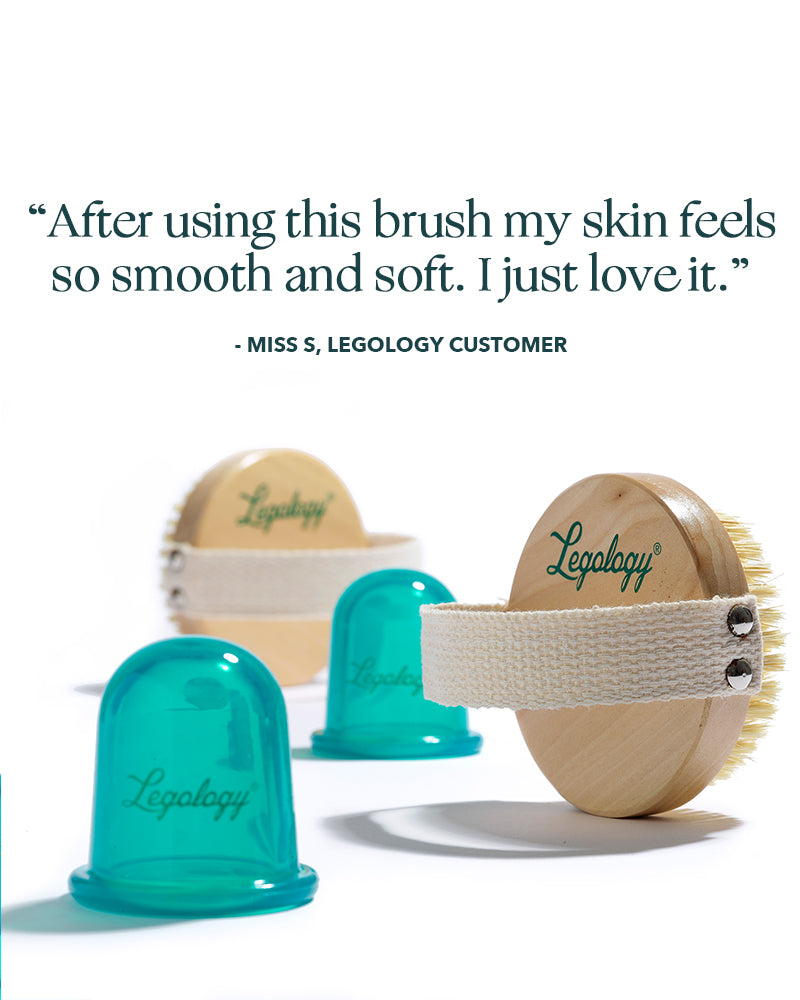
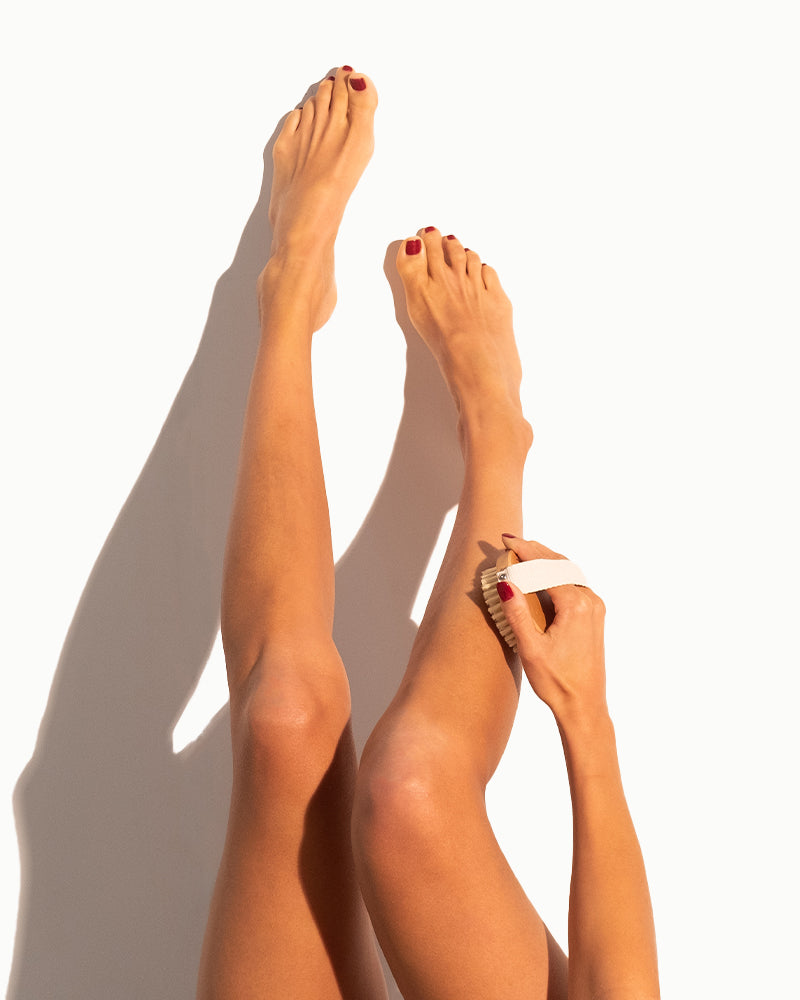
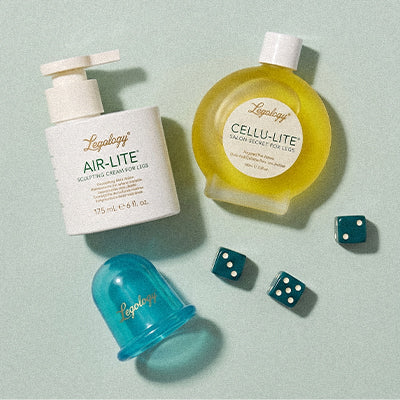
Dr Sophie: I was introduced to the Legology products many years ago now, and I love them all. I always make sure, at the very least, I moisturise and body brush.
Kate: So you'd be a body brusher?
Dr Sophie: I've tried both. I've tried the cup that Legology do. I still went back to my brush. I think I prefer how the brush feels on me.
Kate: Your go-to wellbeing habit?
Dr Sophie: Getting into nature. Yeah. I've done many things over time. But for me, the single biggest one probably has to be getting out into nature. Because if I can go for a walk with the dog I feel like I'm meditating. It just lifts you in the most wonderful way.
Kate: So what would be your top tip for improving lymphatic drainage?
Dr Sophie: Movement. It doesn't matter what movement it is. Whatever works for you. And I think the thing is to do it consistently. You can walk. You can do yoga. You can resistance train but movement of some description has to be it. Just keep, keep going.
Kate: Your leg icon?
Dr Sophie: Serena Williams. Our legs carry us all day long. They are so incredible. And as women, we tend to be so harsh on them. We should be praising them for carrying us through our lives, even if they have a bit of cellulite or aren't quite perfect. And Serena Williams isn't someone many people would pick but the strength and power in her legs is something I admire.