



I’ve been hearing a lot recently about how tightened fascia tissue is responsible for cellulite—and that the only way to release it (and shift the dimples) is to “break it up”. Cellulite has long been blamed on everything from hormones to toxins to poor circulation. In recent years, fascia has joined the list of suspects. But does fascia actually cause cellulite, or does it simply influence how cellulite shows up in some people?
The short answer: fascia is not the sole cause of cellulite, but it can contribute to its appearance under certain conditions, particularly when tissue stiffness affects fluid movement and efficient lymphatic drainage. Understanding how requires looking at cellulite as a multi-factor issue rather than a single structural flaw.
What is fascia, and why is it being linked to cellulite?
Fascia is a connective tissue network that surrounds and supports muscles, fat, blood vessels, nerves, and organs. In healthy tissue, fascia is supple and elastic, allowing layers of tissue to glide smoothly over one another.
The theory linking fascia to cellulite suggests that when fascia becomes thickened, stiff, or less elastic, it may:
- Restrict movement between tissue layers
- Create uneven tension in the skin
- Influence how fat cells push upward against the skin
This can accentuate the dimpled appearance we recognise as cellulite—but that’s very different from being the root cause.
Does fascia actually cause cellulite?
There’s no strong evidence that fascia causes cellulite on its own.
Cellulite primarily forms due to:
- The structure of subcutaneous fat
- Fluid retention—collecting around fat cells and in tissues, pushing the cells out of alignment and causing dimples on the surface of the skin
- Fibrous septae (connective bands that anchor skin downward) which are put under extra strain with fluid retention (note: these are not the same as fascia fibres)
- Hormonal influences (especially oestrogen, which can contribute to fluid retention)
- A sedentary lifestyle—movement supports lymph flow and helps the body filter away excess fluid and metabolic waste
- Genetics
Fascia can fit into this picture as a modifier, not a creator. In some people, tighter or less hydrated fascia may worsen the appearance of cellulite, while in others it plays little to no visible role.
Fascia as a contributor, not the culprit
Think of fascia as part of the environment surrounding fat cells rather than the instigator.
My perspective—and that of Legology’s—aligns with this broader view. We believe that cellulite becomes more visible when fluid becomes trapped between fat cells and within tissue, reducing efficient lymphatic drainage. When excess fluid is present:
- Fat cells expand and become disordered
- Tissue pressure increases
- The skin surface becomes uneven
In this scenario, fascia doesn’t initiate cellulite, but restricted or less mobile fascia may reduce efficient fluid movement, making fluid retention more visible.
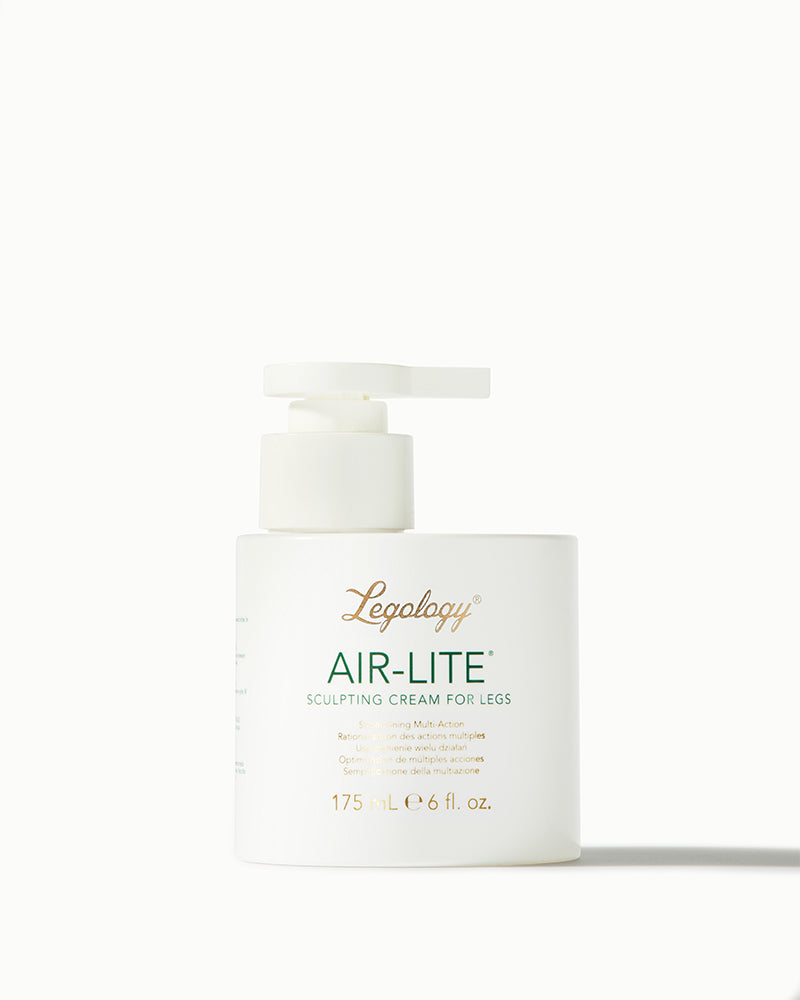
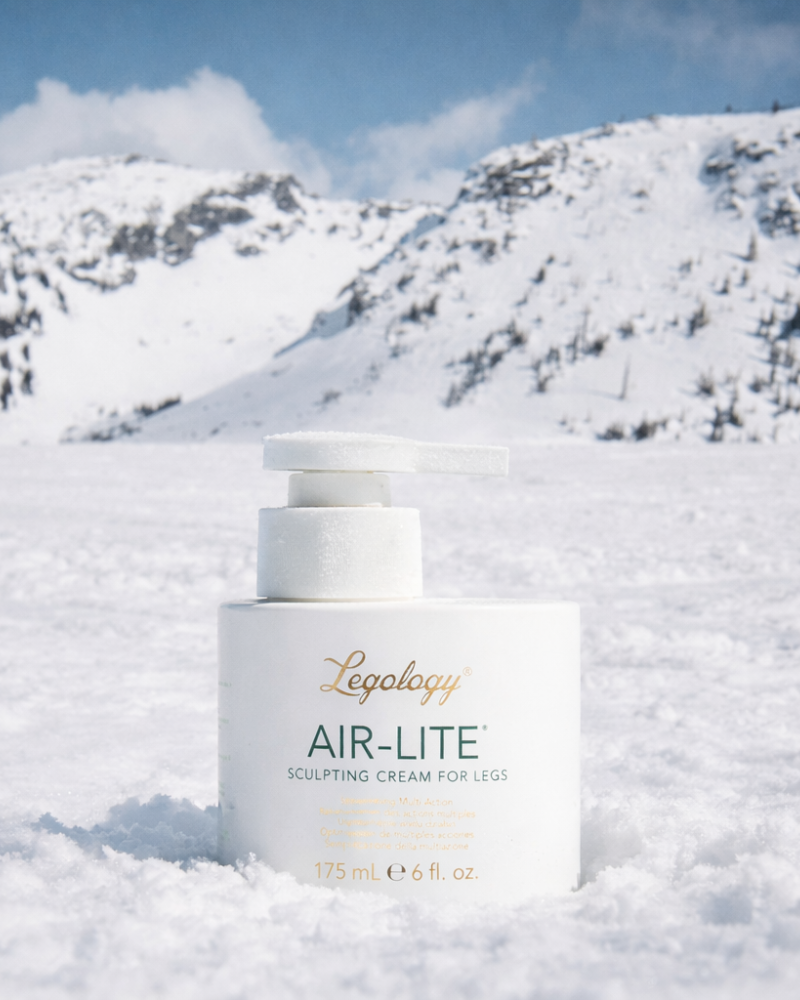
Explore Air-Lite cream for lightweight daily lymphatic drainage support >
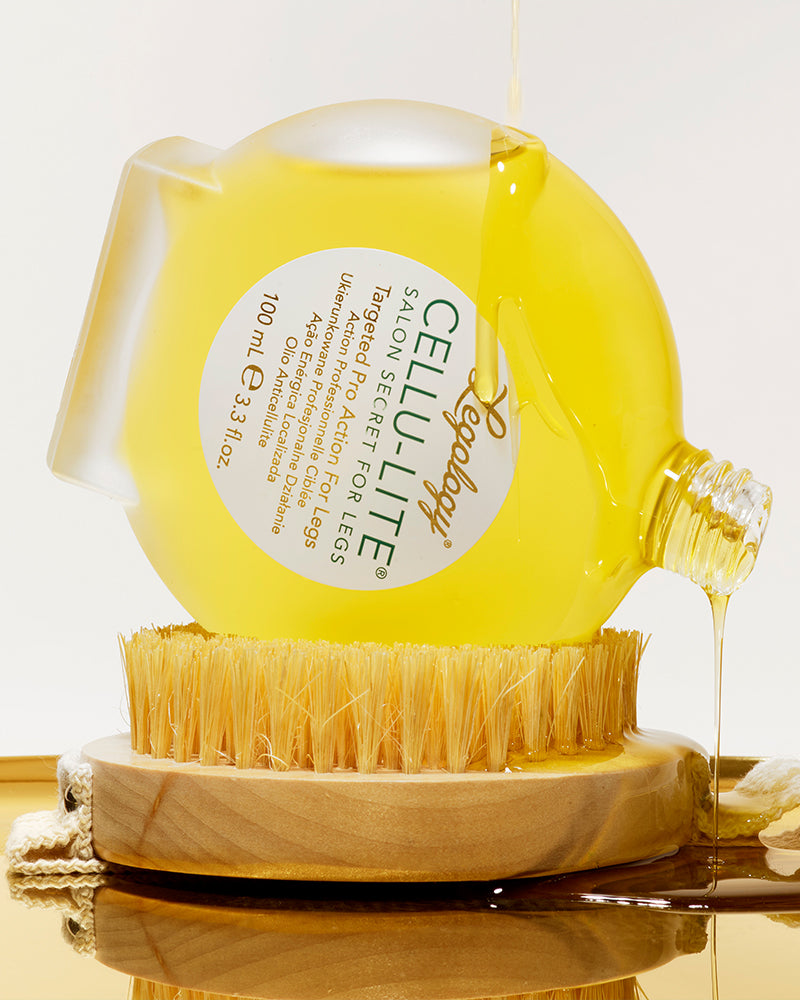
Discover Cellu-Lite oil for targeted massage routines >

Why do people believe fascia contributes to cellulite?
The belief largely stems from three observations:
1) Manual therapies can temporarily improve cellulite appearance
Treatments that target fascia—typically massage and myofascial release with sticks and rollers—often lead to short-term smoothing. This has fuelled the idea that fascia must be “causing” the issue, when the effects are more likely due to increased circulation and temporary plumping at the skin surface. I would even argue that, in some cases, dramatic visible changes can reflect irritation or micro-trauma in deeper layers rather than true “release”.
2) Cellulite often appears in areas with higher perceived fascial tension
Thighs and hips are common sites of both cellulite and stiffness, but correlation doesn’t equal causation.
3) The visual narrative is compelling
Fascia looks dramatic in anatomical diagrams. It’s easy to imagine “tight bands” pulling the skin downward, even though fibrous septae—not fascia—play the primary anchoring role.
Can deep massage or fascia release damage the lymphatic system?
This is a valid concern—and an important one.
The lymphatic system is superficial and delicate, especially compared to muscle or fascia, and it runs close to the skin’s surface. Extremely aggressive or poorly applied deep massage could:
- Compress and damage lymphatic vessels
- Increase inflammation
- Temporarily disrupt lymph flow
However, properly applied techniques do not damage the lymphatic system. Problems arise when:
- Excessive pressure is used repeatedly
- Treatments ignore lymphatic anatomy
- Pain and bruising are treated as “proof” of effectiveness
In reality, lymphatic flow responds best to gentle, rhythmic pressure and supported lymphatic drainage - focused bodycare—not force.

Common ways people try to make fascia less tight
Methods that support fascia health tend to overlap with those that improve circulation and hydration:
- Movement and varied exercise (walking, stretching, strength training)
- Hydration (fascia is highly water-dependent)
- Massage and bodywork (when done appropriately)
- Self-myofascial release (using sticks and foam rollers)
- Heat therapies (saunas, warm baths)
- Consistent skincare massage—especially when focused on drainage
Notably, none of these permanently “fix” fascia, but many can improve tissue glide and fluid exchange—particularly when they’re gentle, consistent, and paired with everyday movement.
So where does fascia really fit in?
Fascia is best understood as one contributing factor among many, not a villain that needs to be “broken up” or aggressively manipulated. It may influence how cellulite looks, especially in people prone to fluid retention or tissue stiffness, but it doesn’t act alone and it isn’t the primary cause.
This is why I’m no fan of so-called fascia blasters and other pain-based body tools that are often marketed with the promise that “breaking up fascia” will eliminate cellulite. The premise is that the more pain, bruising, and soreness you experience, the more effective the treatment is assumed to be. From a lymphatic and tissue-health standpoint, this logic is deeply flawed—and potentially harmful.
The lymphatic system is not built for force
The lymphatic system is:
- Superficial (just beneath the skin)
- Low-pressure
- Fragile compared to muscle or fascia
- Dependent on gentle compression and release, not force
Unlike the circulatory system, the lymphatic system has no central pump. Lymph moves through:
- Muscle contraction
- Breathing
- Gentle skin movement
- Rhythmic pressure changes
Aggressive, painful pressure works against these mechanisms.
What painful fascia blasting can do to lymph
When excessive force is applied repeatedly to tissue—especially to areas already prone to fluid retention—the following can occur:
1) Compression and collapse of lymphatic vessels
Lymphatic capillaries are extremely thin-walled. Heavy pressure can temporarily collapse vessels, reduce lymph uptake, and create congestion rather than drainage. Instead of helping fluid move, “blasting” may trap fluid in tissue—worsening the conditions associated with cellulite.
2) Inflammation can trigger fluid retention
Pain, bruising, and micro-trauma are signs of inflammation, not progress. Inflammation can increase capillary permeability, encourage fluid leakage into tissue, and amplify swelling—sometimes creating a confusing short-term “smoothing” effect that doesn’t hold.












%20is%20to%20%E2%80%9Cbreak%20it%20up%E2%80%9D.%20Cellulite%20has%20lon...)